
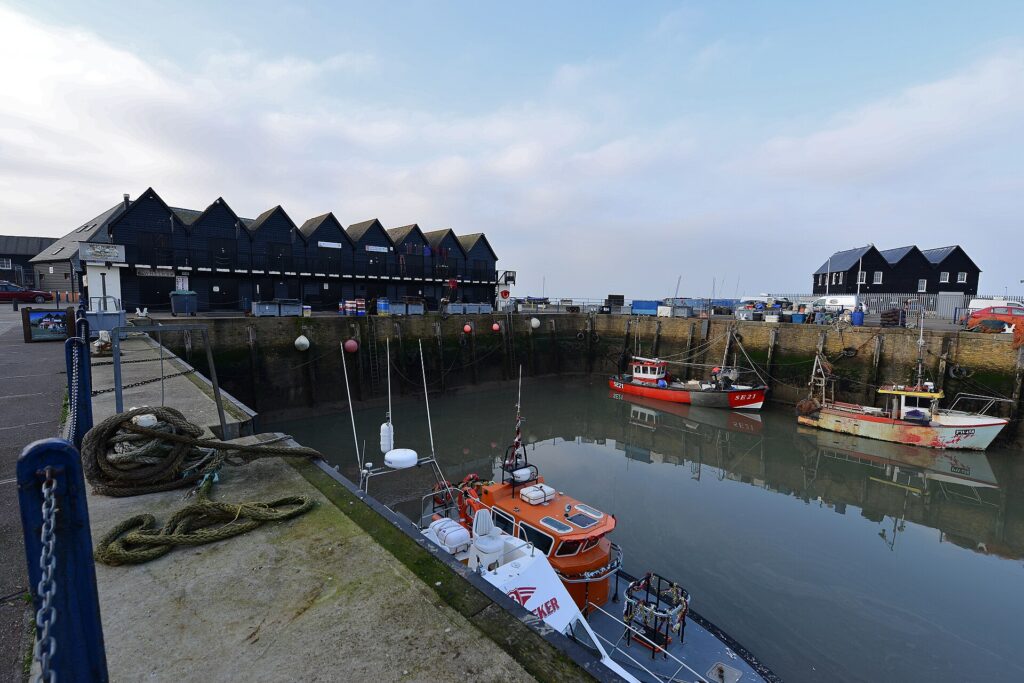
Whitstable Harbour is both a working place and a visitor destination. Fishing, trade and the movement of goods explain its development, while the railway provides an important link between the town’s coastal history and the growth of modern transport.
The harbour built in 1832 should be distinguished from the much longer history of landing and maritime activity along this coast. The new works changed the scale and organisation of an existing relationship with the sea.
The railway comes first
The Canterbury and Whitstable Railway opened in 1830. Known as the Crab and Winkle line, it connected Canterbury with the coast during the early development of public railways.
The harbour followed in 1832 to serve that connection. Goods could pass between ships and railway transport, linking the sea with markets and consumers inland.
This relationship helps explain why the harbour is more than a picturesque enclosure. Its layout developed around the practical transfer of cargo and the economic opportunities created by rail.
A port for more than seafood
Oysters are strongly associated with Whitstable, but the harbour’s commercial history includes a much wider range of cargo.
The council’s visitor history identifies coal and other materials among the goods handled through the port. Industrial supply and building work helped sustain maritime trade alongside fishing.
Looking at the harbour through that wider history changes the picture of the town. Its growth involved employment, storage, transport and manufacture as well as the leisure uses now familiar to visitors.
Oysters and the local identity
Whitstable’s oyster connection predates the nineteenth-century harbour. Cultivation and trade formed part of the coastal economy long before the railway was built.
That history explains why oysters remain central to the town’s identity, but it should not erase other shellfish, fishing activity or commercial work.
A useful visit asks how a food became associated with a place: through natural conditions, working knowledge, trade and the repeated presentation of that connection to outsiders.
Changes in the twentieth century
The railway’s closure in 1952 changed the harbour’s transport connections. The local authority purchased the harbour in 1958 and undertook repairs.
These events show that the harbour’s continued operation was not automatic. Investment and new patterns of use were needed as older economic arrangements changed.
The current municipal role sits within that history of adaptation. Canterbury City Council’s harbour information describes the continuing management of a place that combines commercial activity with public access.
A working harbour and a public destination
Visitors now encounter food businesses, markets and opportunities to explore the waterfront alongside operational areas.
Those uses can coexist, but the harbour remains a workplace. Quays, vehicles, boats and changing waterside conditions require attention, rather than treating the entire site as a pedestrian leisure precinct.
The official harbour-operation pages are a useful complement to visitor listings. They explain a functioning port whose responsibilities extend beyond the experience of someone arriving for lunch or a walk.
Looking beyond the postcard view
Begin with the quays and ask how goods would have moved between water, storage and railway. Then consider the town that developed around those activities.
The Crab and Winkle connection also provides a link with Canterbury’s history, allowing the two places to be understood through transport rather than as separate destinations.
Check current harbour and business information for access, opening arrangements and any restrictions. A historic connection with seafood is not a guarantee that a particular seller or boat trip will operate on the day.
Whitstable’s harbour is most interesting when its visitor appeal is placed alongside the working history that created it. The railway, the port and the town developed through relationships that remain visible in the waterfront today.
Explore our Whitstable town guide for more local information.
Sources
- Visit Canterbury: harbour history
- Canterbury City Council: harbour operations
- Canterbury Historical and Archaeological Society: railway history
- Featured image: Whitstable harbour by Michael Garlick . CC BY-SA 2.0. Resized/cropped for website display; the image retains its stated licence. Archive photograph: 2016-12-20.
