
Business comment
A business owner does not stop working when they take on their first employee. For many readers who run a shop, manage a café, work on building sites or operate a small professional firm, that is an everyday reality. It is also why a Treasury minister’s remarks deserve a serious challenge.
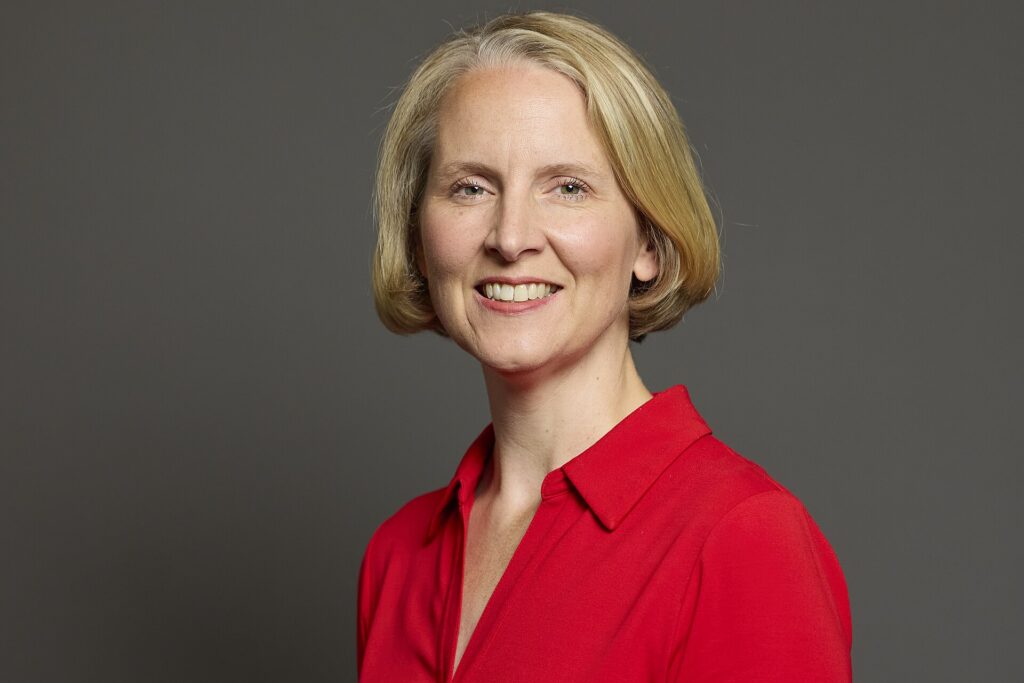
Appearing on GB News on Sunday 1 November 2026, Chief Secretary to the Treasury Emma Reynolds said: “I don’t think employers are working people, they are companies.”
Her wording draws a boundary that many owner-managers will struggle to recognise in their own working lives. InKent’s view is that it overlooks the people doing the work behind the business.
What Reynolds said, and the context
Presenter Camilla Tominey was questioning whether Labour’s tax decisions were consistent with its manifesto commitments. The exchange covered employers, savers and landlords.
Reynolds defended the government’s position, saying it had maintained the headline income-tax rate, VAT and employee National Insurance. She also explained that she was distinguishing employers from employees.
That explanation matters when assessing the interview. It would be misleading to report the short remark without the distinction she said she intended to make. Her position was a defence of the government’s tax commitments, not an announcement that business owners would lose a legal employment status.
Even with that context, the language is open to criticism. A distinction between different tax obligations does not adequately describe the overlapping roles people perform in a small firm.
An employer can also be the person doing the job
The government’s own business guidance recognises a more varied picture. A sole trader can employ people. A company director may also be an employee of their company. A limited company is legally separate from its owners, but the people running it can still work within it.
Those distinctions make a sweeping description of employers as companies unhelpful.
Consider a hypothetical electrician who takes on an apprentice. The owner may continue carrying out installations while also arranging training, pricing work and managing the business. Taking responsibility for another person’s job does not remove the labour involved in their own.
The same principle applies to an owner serving customers, preparing food or delivering a professional service alongside a small team.
Why the issue matters in Kent
Kent County Council’s October 2026 business-counts bulletin records 66,805 VAT/PAYE-based enterprises in the county council area in March 2026. It classifies 90.1% as micro enterprises, with zero to nine employees.
Those Kent figures exclude Medway. Including Medway, the bulletin records 76,150 enterprises across the two areas. The register is not a count of every informal or unregistered business, and the micro category includes firms without employees.
The figures show why small businesses belong at the centre of this discussion. Language that appears to separate employers from people who work risks overlooking a substantial part of the local business landscape.
For an owner-manager, responsibility for customers, staff and the future of the firm can sit alongside the practical work that generates its income. Public debate should recognise that combination.
Why the wording has prompted criticism
The remarks drew criticism from opposition politicians. The Standard reported that Conservative MP Bradley Thomas highlighted small-business owners who employ others, while Reform UK’s Robert Jenrick argued that Labour was overlooking their contribution.
The objection is straightforward: the role of employer and the act of working are not mutually exclusive. An owner can be responsible for paying other people while still delivering the service a customer is buying.
That is the point ministers should address. Describing the legal entity behind a payroll does not answer a business owner’s concern about whether their work is understood.
Small employers deserve recognition
There is room for disagreement about taxation, public spending and how costs should be shared. Those arguments are better when ministers acknowledge the people affected and explain their decisions precisely.
For small-business owners, being recognised as someone who works is a basic starting point. Employing another person can add responsibility to an existing workload; it does not make that workload disappear.
Reynolds should clarify how her description accounts for sole traders with staff and directors working within their own companies. The distinction she drew may serve a political argument, but it does not capture the everyday reality of running a small business.
Employers work too. Government should be able to say so plainly.
Sources
- GB News: interview report, 1 November 2026
- The Standard: interview context and reported political responses
- GOV.UK: Emma Reynolds’s ministerial role
- GOV.UK: business structures, directors and taking on employees
- Kent County Council: UK Business Counts 2026, October 2026 bulletin
- Featured image: official portrait of Emma Reynolds MP, 2024. ©House of Commons / photography by Roger Harris. CC BY 3.0. Commons 3:2 crop, resized for website display. This is a portrait, not a photograph from the interview.
