
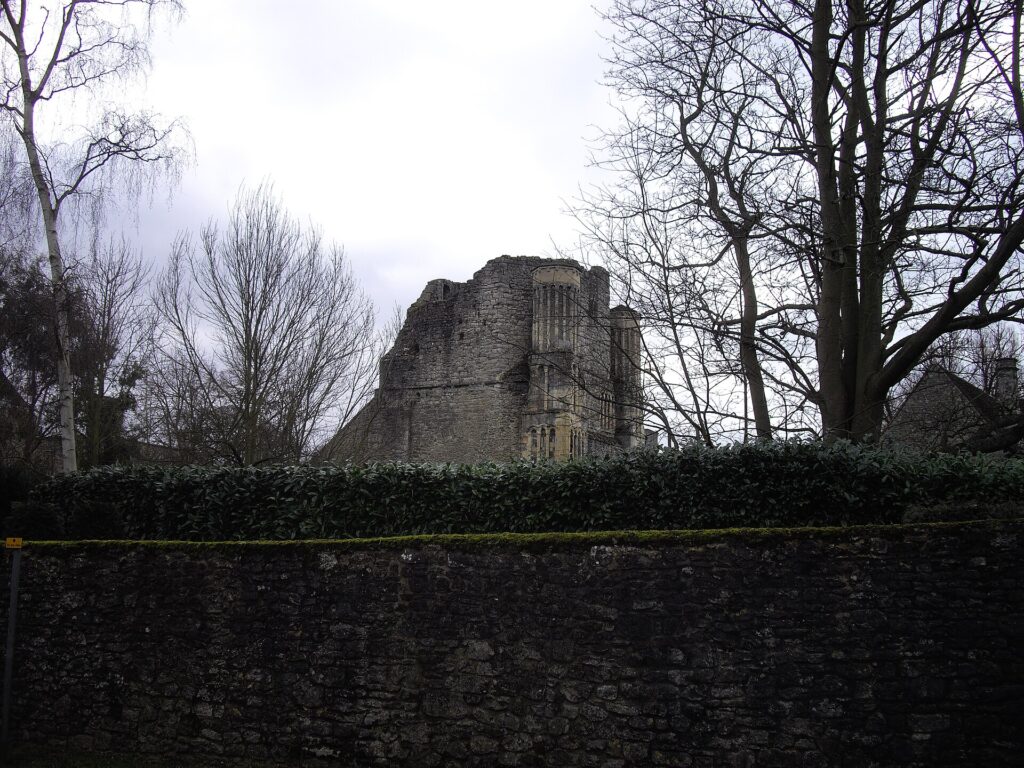
Malling Abbey in West Malling is both a historic site and the home of a living Benedictine community. Its story includes a medieval foundation, the dissolution of the monastery and a later return to religious life.
That combination requires a different approach from visiting a ruin maintained only as a monument. The buildings preserve evidence of earlier centuries, while the present community uses the place for its own continuing purpose.
Gundulf’s foundation
The abbey’s official history dates its foundation to 1090, when Gundulf, Bishop of Rochester, established a community of Benedictine nuns.
The foundation connected the site with land and resources needed to sustain religious life. The abbey was not simply a church standing independently of the surrounding economy.
Later grants included rights relating to markets and fairs. These connections help explain the relationship between a monastic institution and the growth of a nearby settlement.
Fire and rebuilding
A serious fire in 1190 damaged the abbey and village. Rebuilding followed, adding another phase to the site’s architectural history.
The surviving complex should therefore not be treated as a building completed in the year of foundation and left unchanged.
Medieval institutions repeatedly repaired and adapted their surroundings. Fire, changing needs and available resources could all influence the buildings that later generations inherited.
The end of the medieval monastery
The abbey surrendered to the Crown in 1538 during the dissolution of religious houses.
Its official timeline records subsequent private ownership and alterations, including a later mansion built over part of the former monastic area.
This period is important because it explains the break between the medieval institution and the present religious community. A shared site does not mean uninterrupted occupation by the same organisation.
Religious life returns
The modern story includes Charlotte Pearson Boyd’s purchase of the property in 1892 and the arrival of religious communities.
The present Benedictine community was invited to live at the abbey in 1916. Its history is related to the medieval foundation through place and tradition, while remaining a distinct institutional story.
The abbey’s own account is the appropriate starting point for understanding that community and its identity, rather than assuming the terms used for different religious groups are interchangeable.
Old fabric and later buildings
The site contains buildings and remains from different stages of occupation. A twentieth-century church belongs within that continuing development.
This mixture is one reason the abbey should be read as a living place rather than as a complete reconstruction of medieval monastic life.
The relationship between older remains, domestic spaces and current worship expresses both continuity and change. Each period left practical decisions about how to occupy the inherited site.
Visiting with respect
Consult the abbey’s official information before planning a visit. Access to worship, retreats, meeting spaces or historic areas may involve different arrangements.
Do not assume that a historic designation makes every part of a working religious community freely accessible. Photography and group visits should follow current guidance.
West Malling’s town centre provides a wider setting in which to consider the abbey’s relationship with local life.
The abbey’s importance lies in that longer sequence: medieval foundation, disruption, adaptation and renewed community. Understanding the differences between those phases makes its continuing presence in the town more meaningful.
Explore our West Malling town guide for more local information.
Sources
- Malling Abbey: official history
- Malling Abbey: community and visitor information
- Featured image: Malling Abbey Tower West Malling by PAUL FARMER. CC BY-SA 2.0. Resized/cropped for website display; the image retains its stated licence. Archive photograph: 2010-03-13.
