
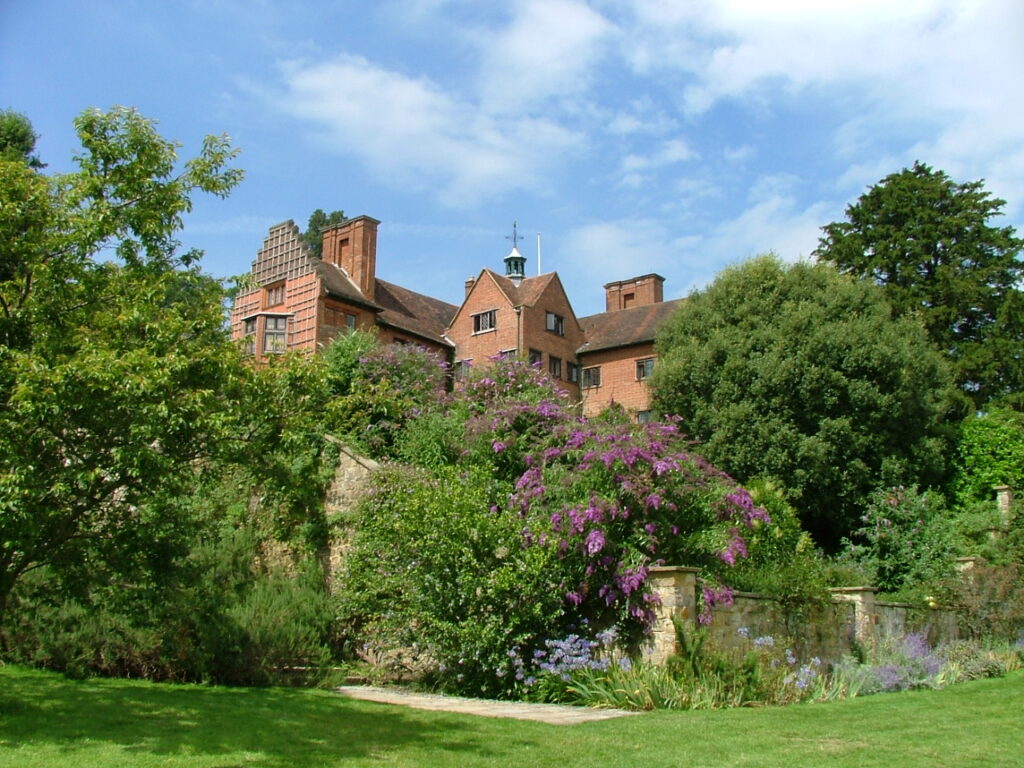
Chartwell, near Westerham, was Winston and Clementine Churchill’s family home. Its rooms, garden and studio connect a nationally prominent political life with the domestic routines, interests and work associated with a particular Kent house.
The property is cared for by the National Trust. It is most rewarding when approached as a home shaped by several members of a household, rather than simply a backdrop for a familiar public image.
The purchase in 1922
The Churchills bought Chartwell in 1922. Work on the house and grounds followed, adapting the property to their needs.
Its appeal included the landscape and the opportunities it offered for family life away from Westminster.
The purchase did not mean the house immediately looked exactly as visitors see it now. Building work, planting and changes in use formed part of the process through which Chartwell became the family home associated with the Churchills.
A place for work as well as retreat
Churchill’s writing and political work continued at Chartwell. A country home could provide distance from official surroundings without removing its occupant from public affairs.
Rooms used for study and correspondence help explain the practical labour behind a public career: reading, drafting, organising material and communicating with others.
The house’s significance therefore extends beyond major speeches or wartime photographs. It preserves a setting in which less visible forms of work took place.
Painting and the studio
Churchill’s painting provides a different perspective on his life. The studio and works associated with it show an activity pursued alongside politics and writing.
A visit can consider painting as a practice involving looking, materials and time, rather than simply as an unexpected hobby attached to a famous name.
The garden and wider landscape also belong to that visual world. Their value is not only that they surrounded the house, but that they supplied settings and interests within the household’s daily life.
Clementine and the family home
Chartwell was a family property, and its history includes Clementine’s role as well as Winston’s.
Domestic arrangements, visitors, children, staff and the demands of maintaining the estate all formed part of its operation. A house on this scale depended on considerable work by people whose names are less prominent in national histories.
Keeping that wider household in view makes the interpretation more balanced. The home supported a public life through routines that extended well beyond one person’s study.
The National Trust connection
The National Trust acquired Chartwell before Churchill’s death, through an arrangement that allowed the Churchills to continue living there.
The house opened to the public in 1966. That date should be distinguished from the earlier transfer of ownership and from the family’s purchase in 1922.
These separate events explain how a private home became a property preserved for public understanding, rather than suggesting that the transition happened in a single moment.
Planning a thoughtful visit
Check the National Trust’s current information for house entry, booking, gardens, studio access and accessibility.
The property is near Westerham rather than in the town centre. Allow for the journey between the town and the estate, and avoid relying on assumptions about public transport or walking routes.
Chartwell offers a useful balance to the public record. It places political work, painting and family life within an environment that was repeatedly shaped by the people who lived and worked there.
Explore our Westerham town guide for more local information.
Sources
- National Trust: Chartwell's preservation story
- Kent Historic Environment Record: Chartwell
- National Trust: Chartwell visitor information
- Featured image: Chartwell House. Public domain. Resized/cropped for website display; the image retains its stated licence.